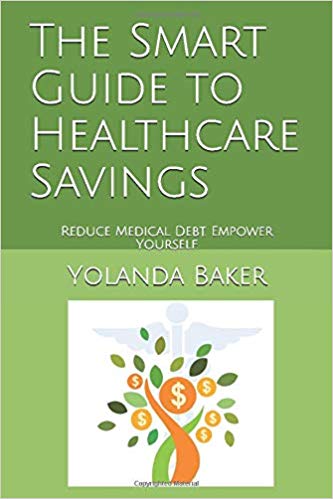
The 6th edition of my book, “The Smart Guide to Healthcare Savings” is now available in Amazon.
If you are interested in a PDF preview copy of the book, please email me at CurativeFinance@gmail.com
Thank you!
The 6th edition of my book, “The Smart Guide to Healthcare Savings” is now available in Amazon.
If you are interested in a PDF preview copy of the book, please email me at CurativeFinance@gmail.com
Thank you!
A few days ago, I presented my blockchain-based healthcare savings system, Curative Finance, at the Austin Blockchain Alliance Meetup.
My presentation at the meetup is here on YouTube:
You can also email me at CurativeFinance@gmail.com if you wish to see the PDF presentation.
Following my presentation, Richard Hurley and Keith Guidry from the Lillypond Project presented a document “protective reputation” system for the disabled, anchored in Blockchain:
It was pure luck that Lillypond’s presentation followed mine; we both talked about how technology can assist the most vulnerable populations.
I had a great time presenting, and hope to network with more like-minded folks.
Hello Everyone,
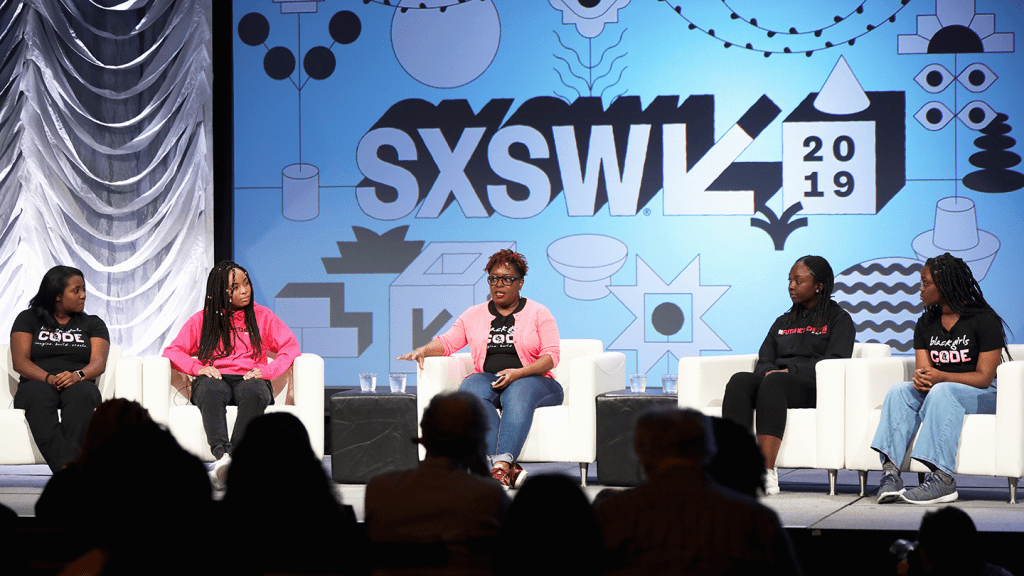
My idea for a SXSW Presentation was entered into the final round! From now until August 23, anyone can visit the SXSW site and vote for a presentation you think would benefit the attendees of the next event, taking place March 2020 (hopefully mine).
My presentation, “Curative Fintech: A Crypto Medical Savings System” is the story of my journey into medical debt. I was able to move past debt by creating a unique method that reduces healthcare expenses. My revised system now includes a blockchain and cryptocurrency component.
Here is the presentation I submitted.
I would love to represent the special needs community and those affected by medical debt. Help me achieve that goal by your vote!
If you want more details on my idea, or if you would like to receive the presentation via email, feel free to reply to CurativeFinance@gmail.com.
Sincerely,
Yolanda Baker
I was accepted into the Newchip accelerator bootcamp program!
For the next four weeks, I will study what it takes to succeed as a startup. Well, that’s the simple way to describe it.
What shocked me the most was not that I was accepted, but how little I currently know about fundraising. The Table of Contents was a wake up call.
For the past several years, it has been an uphill battle to figure out how to get clients. What I should have concentrated on is how to successfully raise funds for my business.
Here are just a few of the things I will learn:
So much to learn. Thank goodness I am a voracious reader!

Have a great rest of the week.

I visited the Austin office of Newchip this afternoon. Every Tuesday in July, the office will have a free co-working event, and so I decided to stop by and say hello.
Newchip, according to their page, is about focusing on product development, as well as ” … fundraising, negotiating, partnerships, and scaling revenue …”. I’ve done a bit of research on firms such as Newchip, and it is one of the few I’ve found that has such an extensive accelerator program for startups, and the only one I’ve found so far in Austin.
This appears to be a great place for startups that are just beginning their venture. There is a general work space open regular business hours Monday through Friday. There are also dedicated desks and small offices that are open extended hours.
Kim, the receptionist, was kind enough to offer me a quick tour of the place. I liked that it was a “lean” working environment without it feeling spartan.
Next week, I have a short telephone meeting with a Newchip representative. We’ll go over the various accelerator programs they provide and see if my company is a good fit. I’ll keep you updated!

Update: I’m slugging away at the SXSW PanelPicker application. It’s due within two weeks, and as I enter the answers to questions, I realize what an incredible challenge this is. I can’t wait to share this with y’all!

The 2019 SXSW PanelPicker is here!
A summary of the PanelPicker is described below. The links will take you to the appropriate sections.
PanelPicker is the official SXSW user-generated session proposal platform developed to encourage the community to pitch their proposals for our daytime conference programming. This easy, two-step online process allows the SXSW community to have a voice in what creative and thought-provoking programming is scheduled at the SXSW Conference and SXSW EDU.
There are many session formats to choose from. Here are a few:
The PanelPicker runs from July 1 to the 19th. I am in the process of submitting my pitch for the Pitch Event. Although I am unable to describe in detail what my idea is,
I will drop hints here and there in future posts of my ideas. In the meantime, send me comments if you’ve attended SXSW before. I’ve attended SXSW Edu, but I’d like to know your experiences with past SXSW Interative sessions.
I’m not a programming expert. In fact, I hate programming. My main career path has been in general management; computer science courses were not required for an Accounting degree. I can’t even spell pergramming.
My first college major was Engineering. There was a joke circulating in the engineering department. It went something like this:
What do you call an Engineering Major dropout? An Accounting Major.
Initially, things went well with my intro Engineering courses. However, I was required to take a Pascal Programming class. I failed the class once and almost failed the class again.
Computer Programming stressed me so much I changed my major to Accounting.
There was a joke circulating around the business school:
What do you call an Accounting Major dropout? A Marketing major.

For years, I avoided learning any programming language. Besides, I enjoyed Accounting, and programming was not needed.
When I heard about Cryptocurrency, I wasn’t initially impressed. Another future dot-com failure, I erroneously assumed.
However, once I discovered the Blockchain and its worldwide implications, I was hooked. I felt I needed to be a part of this.
I had to learn a few programming languages to get a deep understanding of the Blockchain,
Soon after, I began online HTML and CSS courses. I eventually understood the basics, but I wasn’t interested in proceeding further.
I discovered Solidity. Simply put, it is a programming language to create smart contracts in the Blockchain. I visited a training website, BitDegree, where there was a fun, interactive course on Solidity.
When I started the free course, I wasn’t sure if I would be succesful on creating a smart contract via Solidity and “Space Doggos”. But after three online lessons, I felt a sea change. It was still difficult, but it wasn’t impossible. My skin didn’t break out in a rash. What happened?
I had fun with the program. I completed the first three tasks without a hitch; I gained confidence to continue.
Maybe I’m older and wiser. Maybe I just had to be motivated due to something so exciting, so earth-shattering like the Blockchain, that programming was now possible.
I’m not a programmer. I can do create a WordPress website with plugins, but I’m light years away from applying for a Full Stack web developer position.
My goal is to have a rudimentary knowledge of a few programming languages. I feel my career path is leading me to a finance position at a startup Blockchain company. Understanding programming languages will help me gain insight as to what my programmers are doing, and why.
I’ll continue to post updates on my adventures in Blockchain.

Thoughts before, during, and after my first Blockchain Meetup:
Last Saturday, I had a Eureka! moment. No, my idea didn’t form in my head while I bathed in the rub like Archimedes. It didn’t hit me like a ton of bricks the way it does like Dr. House.
When an idea forms in my head, it occurs when I am in the middle of a mundane task – washing dishes, running an errand, or listening to a cruddy podcast.
I’m going to let you in on a little secret about ideas, a theory that can never be proven. I can make millions on it – writing a best selling novel, becoming the female Seth Godin. Although this secret is pretty incredible, I have a low tolerance for keeping such juicy morsels from you, dear reader.
Here it is:
When an idea pops in your head, don’t dismiss it.
“That’s it?” you mutter, as you throw your iPhone out the kitchen window. Please, my fellow lover of knowledge, hear me out. Most humans, when an idea presents itself, will ignore it and move on to more pressing, present errands.
I have to pick up the kids. The dishes are piling in the sink. Did I pay my utility bill? In other words, I don’t have time for this!
Listen to me: Listen to yourself. Don’t dismiss your thoughts.
This is meant for perfectly rational thoughts and not those that will cause harm to yourself or others. This is meant for those thoughts that have the potential to become great ideas, that then have the potential to become great services or products.
I may wax poetic about my idea theory in another article.
An idea popped in my head listening to a podcast while doing laundry. The podcast was delving into the Blockchain protocol “proof of work”. This subject interests me immensely, but unfortunately, the podcaster had a unique ability of sucking the life out of an interesting topic.
“Maybe this is boring,” I thought, “because I can improve on this idea.”
POP! My idea explodes in my head. Stuck in the middle of piles of clothing in my laundry room, I mutter under my breath the idea so that I don’t forget it. A few minutes pass as I shove clean clothes into recognizable piles then walk quickly to my desk.
The idea is scribbled on the only piece of paper available – a crumbled receipt. I have a bad habit of leaving my note pads everywhere else but my desk.
I discover scraps of paper in the recycling bin nearby. Writing furiously for two pages, I feel confident all the info I had in my head is out.
At this time, I cannot divulge what the idea is. It is connected to Blockchain. It may be complete rubbish. It may lead to another great idea. This idea will may become the reason why I create a Blockchain company. Stay tuned.
 Curative Finance: Ideas for the Disabled Community